Clinical evaluation report for CE mark
Situation
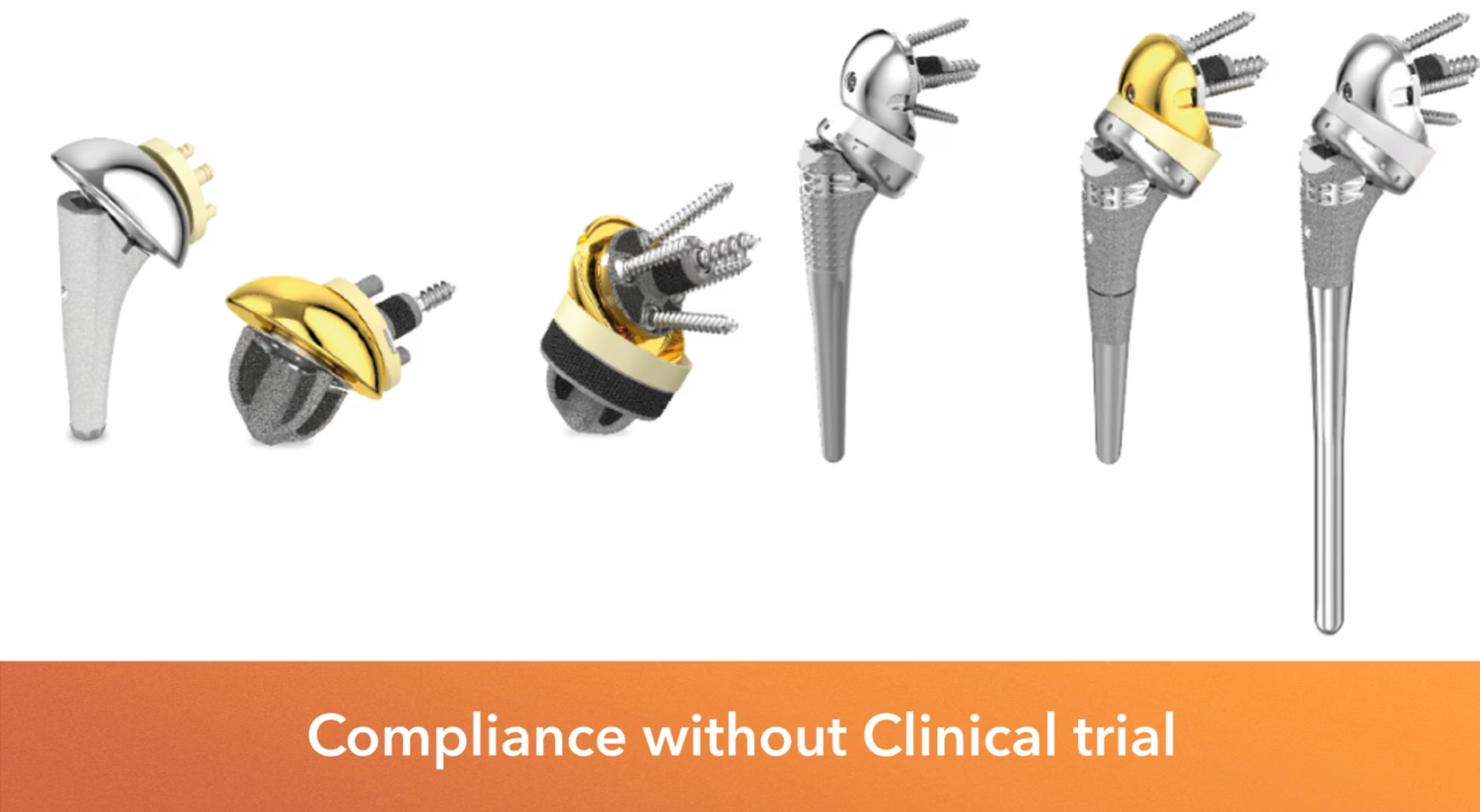
A leading European mid-sized orthopedic OEM faced significant time pressure and limited internal resources while developing Clinical Evaluation Reports (CERs) for a complex Class III implant system. The company planned to demonstrate equivalence, but no single equivalent device could represent the entire system. Limited clinical data added another challenge and increased the risk of missing important regulatory deadlines. The OEM needed a practical strategy that could address the complexity of the implant system while making effective use of the available evidence.
Capabilities
The OEM needed an experienced partner who could navigate complex regulatory requirements for Class III medical devices. The team also needed to develop an equivalence strategy without relying on a direct one-to-one equivalent. BAAT Medical combined regulatory knowledge, clinical evaluation expertise, and practical problem-solving to develop a compliant strategy. Our team assessed the available clinical evidence and identified the best way to support the different components and configurations of the system.
Solution
BAAT Medical developed a modular CER strategy covering four implant CERs and one instrument CER. This approach allowed the team to assess each component of the system in greater detail. BAAT used multiple reference devices across the CERs to demonstrate equivalence and support each system configuration with relevant clinical data. This strategy helped the team maximize the available evidence while meeting regulatory requirements. It also eliminated the need for additional clinical studies.
Result
BAAT Medical completed the project within the required timeline despite the complexity of the system and the client’s limited resources. The modular CER strategy provided a robust clinical evaluation for the complete system and aligned with regulatory expectations. By addressing the challenges around clinical data and equivalence, BAAT delivered a complete, audit-ready documentation package without requiring additional clinical investigations. The project demonstrates how a structured regulatory strategy can help medical device companies manage complex clinical evaluation requirements efficiently.