Cresco Spine SDS: Innovative Spinal Implant
Pediatric spinal implant shows the power of combined expertise
Finding a solution for the treatment of severe scoliosis is an achievement in itself. However, bringing that solution to market so other surgeons and young patients can benefit from it is another challenge altogether.
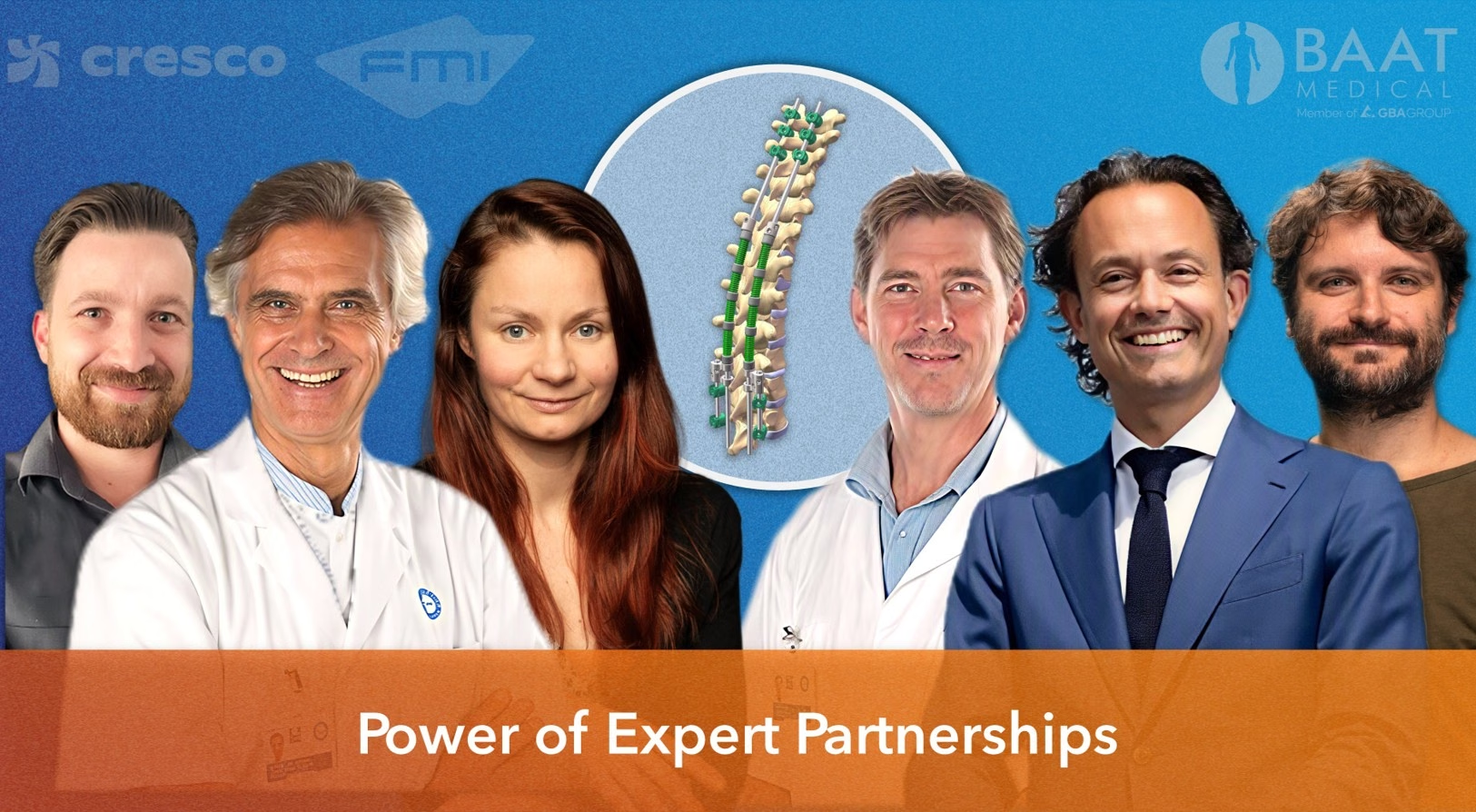
Yet Cresco Spine has achieved exactly that. As a result, the start-up is preparing its spinal implant for a global rollout, with InSpine Innovations, BAAT Medical and FMI as essential partners. Ultimately, teamwork is crucial when innovation, medical expertise, product development and manufacturing come together.
A dynamic solution for scoliosis
The success of a medical innovation follows from a mix of factors. First, the invention must offer a solution to an urgent problem. It also needs to provide the basis for a healthy business. Then there is the research needed to find the right combination of materials. There is also the perseverance to fine-tune an application and the knowledge required to comply with regulations and legislation.
According to orthopedic surgeon René Castelein, the proven value of the Spring Distraction System (SDS) deserves special attention. The implant was partly developed by Castelein and was first applied in 2015 to a girl who was around five or six years old. The procedure was exciting and challenging. However, it went remarkably well. More importantly, her spine has developed very well more than ten years later.
“Our system has undergone some small modifications, but its principle is exactly the same as it was then. What we hoped for is indeed working.”
Dynamically supported
Castelein, like co-inventor Moyo Kruyt, is connected to UMC Utrecht. Both specialize in treating early-onset scoliosis, where the spine of a young patient becomes severely curved during growth.
The consequences can be significant. For example, the girl treated in 2015 had difficulty breathing and heart problems. Therefore, this called for a specific solution. However, one was not yet available. As a result, Castelein and Kruyt developed one themselves after extensive consultation and research. The result was a system based on a spring.
This spring continuously supports the growth of the spine and guides it in the right direction. In addition, the SDS distinguishes itself from other growth-friendly systems because it can be adapted to different body shapes. It guides and activates growth in the right direction.
As a result, one procedure is enough to correct and support spinal growth for the following years. Consequently, the patient does not need to visit the hospital every few months for further lengthening. “Bones, muscles and cartilage remain much healthier because of this dynamic approach.”
An incubator for innovation
After the first procedures, Castelein and Kruyt discussed their research and results in scientific publications and at specialist conferences. Interest in the system grew in the Netherlands and abroad. The two colleagues realized that their system could potentially become the start of a new standard. They therefore contacted InSpine, a distributor of spinal surgery implants in the Netherlands.
In addition to its commercial activities, the company has an innovation division in Schiedam called InSpine Innovations. A small team assesses new solutions for clinically relevant challenges as an incubator. The aim is to bring these solutions to market within a healthy business case and with sufficient commercial strength. The implant developed by Castelein and Kruyt became one of these innovations.
“Think, for example, about intellectual property and the commercial perspective,” says Dennis Magermans, Director Innovations at InSpine. “There was also some wear of the metals in the construction that René and Moyo had used until then. “The wear was minimal and not a clinical issue. But what would its impact be commercially?”
InSpine commissioned extensive testing by BAAT Medical. Based in Hengelo, BAAT Medical turns customer ideas into fully certified medical solutions. As an innovation partner, BAAT supports projects with material selection, supplier selection and further product development. This collaboration gave InSpine confidence in the development process.
“For this project, we did not even look at other parties.”
Involved in medical innovation
The technical research ultimately gave the green light for the implant development process. In 2021, Cresco Spine was established as a joint venture between InSpine, Castelein and Kruyt and UMC Utrecht.
The start-up fits well within BAAT Medical’s customer base, says business developer Dymphy van der Wilk. “We are involved in many innovative projects in spinal surgery, and we want to be. The benefits for the target group are significant, which is exactly why we are happy to contribute.”
According to Van der Wilk, this quickly requires a customized approach, depending on the product specifications.
“Every innovation requires its own combination of tests. For example, cleanliness is important for implants. But the product must also be strong enough, and the surgeon must be able to handle it properly. That is why we also look at usability.”
The goal is to demonstrate to regulatory authorities that a product is safe and effective.
Consultation highlights the urgency
Both requirements are closely connected to the desired quality level. Achieving this balance can be challenging, says BAAT Medical project manager Vittorio Ricca. “Innovations such as Cresco Spine’s are not analogous to current technologies in the field.
At the same time, quality must not become a limiting factor on the way to the final product. Instead, you want to achieve the most efficient solution at a realistic price without losing too much quality.” Much therefore depends on consultation.
Ricca and his colleagues worked closely with surgeons Castelein and Kruyt. “The impact on children is enormous. We already knew that. But the input from René and Moyo increased our involvement.
It challenged us even more to make this solution market-ready as quickly as possible.”
Understanding the spinal implant
Before market introduction, the implant still faced one important phase. How can strict product requirements be guaranteed in every system? There must be no differences in quality between individual products.
For large-scale production and quality assurance, BAAT Medical therefore worked with the medical division of supplier FMI in Schiedam. The cooperation between the two companies goes back many years, explains Stefan Broks, Account Manager at FMI.
“We want to understand an instrument or implant, as it were, so that we can optimize production through co-engineering. Only then can you achieve the balance between quality and consistency.”
Innovation is also familiar territory for FMI. The company has contributed to many projects. However, the Cresco Spine project was genuinely new.
Technically, it was challenging. Yet, like BAAT Medical, FMI recognized the need to give the project priority. “The potential for the children involved is simply too great to leave it on the table.”
Change is needed
With FDA approval, Cresco’s SDS received the green light for the US market. Canada, Australia and New Zealand are expected to follow, says Cresco CEO Magermans. The implant could then enter the UK market as well. The European approval process has started.
According to Magermans, the worst-case scenario could take around three to five years. Once this is achieved, Cresco Spine aims to make the system available worldwide with sufficient commercial strength.
Castelein believes Cresco Spine has the international contacts needed for this ambition. He also points to the wider need for new solutions in spinal care. The current SDS is therefore also being further developed. One future direction is a system with a rotation component.
Although this development is still in its early stages, Castelein is certain of one thing: “The philosophy for the treatment of scoliosis is ready for change.”
Trust the expertise of others
Looking back at the development and introduction of the SDS, Castelein knows how important it is for different specialists to understand each other.
“In a project like this, all areas of expertise in innovation, medical science, product development and commercial expertise come together. Therefore, take the time to understand each other and recognize that this diversity is essential.
Everyone has their own perspective, but that is precisely the formula for success.” Magermans fully agrees. “The effort of the entire team guarantees effectiveness. Everyone’s expertise is indispensable.
Therefore, avoid reinventing the wheel. Instead, trust partners such as InSpine Innovations, BAAT Medical and FMI. These partners know what they are doing.”
Rugimplantaat Cresco Spine zet wereldwijd nieuwe standaard
Kinderimplantaat voor de wervelkolom
toont de kracht van ieders expertise
Een oplossing bedenken voor de behandeling van ernstige scoliose is al een prestatie op zich. Laat staan die daarna op de markt te brengen, zodat ook andere chirurgen en hun jonge patiënten ervan kunnen profiteren. Toch is het Cresco Spine gelukt. De start-up maakt zich met het eigen rugimplantaat op voor een wereldwijde uitrol, met InSpine Innovations, BAAT Medical en FMI als onmisbare partners. Want teamwork? Ook hier is het cruciaal.
Het succes van een medische innovatie volgt uit een mix van factoren. Zo biedt de uitvinding allereerst een oplossing voor een urgent probleem, naast de basis voor een gezonde business. Maar denk ook aan al het onderzoek voor de juiste combinatie van materialen. Aan het doorzettingsvermogen om een toepassing te finetunen, en aan de kennis om aan de benodigde regel- en wetgeving te voldoen.
Over dat alles zo dadelijk meer. Want laten we volgens orthopedisch chirurg René Castelein vooral ook stilstaan bij de bewezen waarde van het Spring Distraction System (SDS), zoals het mede door hem ontwikkelde implantaat heet.
De eerste toepassing ervan dateert alweer van 2015, voor een meisje van destijds zo’n vijf, zes jaar oud. Zeker, de ingreep was spannend. Maar het ging wonderbaarlijk goed, vertelt Castelein, en minstens zo belangrijk: haar rug heeft zich ruim tien jaar later uitstekend ontwikkeld.
‘Ons systeem heeft intussen wat kleine modificaties ondergaan, maar het principe ervan is nog exact hetzelfde als toen. Waar we op hoopten, blijkt inderdaad te werken.’
Dynamisch ondersteund
Castelein is net als mede-uitvinder Moyo Kruyt verbonden aan het UMC Utrecht. Beiden zijn gespecialiseerd in behandelingen van vroeg beginnende scoliose, waarbij de wervelkolom van de jonge patiënt sterk verkromt tijdens de groei.
De gevolgen zijn ingrijpend, zoals ook voor het meisje in 2015. ‘Ze ademde moeilijk, had hartproblemen’, blikt Castelein terug. ‘Dit vroeg om een specifieke oplossing, alleen: die was er nog niet. Daarom hebben Moyo en ik die na veel overleg en onderzoek zelf bedacht. Resulterend in een systeem dat uitgaat van een veer, die de continue groei van de rug dynamisch in de juiste richting stimuleert en stuurt.’
De twee chirurgen moesten een stevig dossier aanleveren om de door hen bedachte oplossing te mogen toepassen binnen het UMC Utrecht. Maar zoals gezegd, de ingreep verliep voorspoedig, waarna ook andere patiënten in deze academische setting het implantaat kregen. Eenmaal in het lichaam doet het verend z’n werk. En juist dat laatste is wat SDS onderscheidt van andere ‘groei-vriendelijke’ systemen, duidt Castelein.
‘Het systeem kan gemakkelijk worden aangepast aan de verschillende vormen van het lichaam, en begeleidt en activeert de groei in de juiste richting. Eén ingreep is genoeg voor de correctie en de groei van de wervelkolom voor de jaren erna. Daarvan profiteert de patiënt, die niet iedere paar maanden naar het ziekenhuis moet voor een verdere verlenging. Bovendien: botten, spieren en kraakbeen blijven veel gezonder, juist door die dynamiek.’ ‘Botten, spieren en kraakbeen blijven veel gezonder’
Incubator voor slagkracht
Castelein en Kruyt bespraken na die eerste ingrepen hun onderzoek en resultaten in wetenschappelijke artikelen en op specialistische conferenties. Daardoor groeide de belangstelling voor het systeem in binnen- en buitenland en beseften de twee collega’s dat hun systeem best eens de opmaat naar een nieuwe standaard kon zijn.
Dus werd er contact gezocht met InSpine, distributeur van wervelkolomchirurgische implantaten binnen Nederland. Naast de commerciële activiteiten in Nederland heeft het bedrijf in Schiedam met InSpine Innovations ook een innovatietak.
Een klein team beoordeelt nieuwe oplossingen voor klinisch relevante vraagstukken als een incubator, om die vervolgens binnen de kaders van een gezonde business-case met voldoende commerciële slagkracht op de markt te brengen. Zo ook het door Castelein en Kruyt ontwikkelde implantaat, al vroeg een marktintroductie uiteraard om de benodigde voorbereidingen.
‘Denk bijvoorbeeld aan het intellectueel eigendom en het commercieel perspectief’, zegt Dennis Magermans, director innovations van InSpine. ‘Ook was er wat slijtage van de metalen in de constructie zoals René en Moyo die tot dusver hadden gebruikt. De slijtage was weliswaar minimaal en klinisch gezien geen issue. Maar toch, wat zou de impact zijn in commercieel opzicht?’
InSpine liet er uitvoerige testen voor afnemen door BAAT Medical, dat is gevestigd in Hengelo en ideeën van klanten omzet in volledig gecertificeerde medische oplossingen. Zo zorgt het bedrijf als partner in innovatie voor bijvoorbeeld de juiste materialen en selectie van toeleveranciers, naast diensten voor verdere productontwikkeling. Dit alles tot tevredenheid bij Magermans: ‘We hebben voor dit project niet eens naar andere partijen gekeken.’
Betrokken bij innovatie
Uiteindelijk gaf ook het technische onderzoek groen licht voor de start van het ontwikkeltraject van het implantaat. Dus kwam het in 2021 tot Cresco Spine, een joint venture tussen InSpine, Castelein en Kruyt en het UMC Utrecht. De start-up past perfect binnen de klantenkring van BAAT Medical, stelt business developer Dymphy van der Wilk. ‘We zijn betrokken bij veel innovatieve projecten in de wervelkolomchirurgie en wíllen dat ook. De voordelen voor de doelgroep zijn groot, juist daarom werken we er graag aan mee.’
Dat laatste vraagt volgens Van der Wilk al snel om maatwerk, afhankelijk van de gestelde specificaties van een product. ‘Elke innovatie vraagt om een eigen combinatie aan tests. Bijvoorbeeld op het vlak van reinheid, zoals bij implantaten. Maar vergeet niet dat het product ook sterk genoeg moet zijn, en dat de chirurg het goed moet kunnen hanteren. Daarom kijken we ook naar usability. Het gaat erom dat we de regelgevende instanties kunnen aantonen dat een product veilig én effectief is.’
Overleg benadrukt urgentie
Uiteindelijk zijn beide voorwaarden onlosmakelijk verbonden met het gewenste kwaliteitsniveau. En ja, dat is een uitdagende balans, weet BAAT Medicals projectmanager Vittorio Ricca. ‘Innovaties zoals die van Cresco Spine zijn nu eenmaal niet analoog aan de huidige technologieën in het veld. Tegelijkertijd mag kwaliteit geen belemmerende factor worden op weg naar het uiteindelijke product. In plaats daarvan wil je toe naar de meest efficiënte oplossing, voor een realistische prijs zónder te veel verlies aan kwaliteit.’
Veel valt of staat dan ook met overleg, waarvoor Ricca en zijn collega’s onder anderen schakelden met chirurgen Castelein en Kruyt. ‘De impact op de kinderen is enorm, dat wisten we al. Maar de input van René en Moyo vergrootte onze betrokkenheid, daardoor werden we extra uitgedaagd om deze oplossing zo snel mogelijk marktrijp te maken.’ ‘Kwaliteit mag geen belemmerende factor worden op weg naar het uiteindelijke product’
Het implantaat begrijpen
Vooraf aan de marktintroductie wachtte het implantaat nog één belangrijke fase. Want hoe zorg je ervoor dat de strenge producteisen gegarandeerd zijn in elk systeem? Onderling verschil in kwaliteit mag er simpelweg niet zijn. Zo weten ze ook bij BAAT Medical, dat voor de grootschalige productie en kwaliteitsbewaking een beroep deed op de medische afdeling van leverancier FMI in Schiedam.
De samenwerking tussen de twee bedrijven gaat ver terug, vertelt Stefan Broks, accountmanager bij FMI. ‘En dat valt of staat met open communicatie. We willen een instrument of implantaat als het ware begrijpen, zodat we met bijvoorbeeld co-engineering de productie kunnen optimaliseren. Alleen dan kom je tot die balans tussen kwaliteit en consistentie.’
Innovatie is ook FMI niet vreemd, benadrukt Broks, het bedrijf heeft meegewerkt aan tal van projecten. ‘Maar toch, dit was écht iets nieuws. Technisch uitdagend, dat zeker. Maar net als BAAT Medical voelden ook wij de noodzaak om hier prioriteit aan te geven. Het potentieel voor de kinderen waar het hier om gaat is simpelweg te groot om te laten liggen.’
Verandering is nodig
Met de FDA-goedkeuring kreeg Cresco’s SDS begin dit jaar groen licht voor de Amerikaanse markt. Canada, Australië en Nieuw-Zeeland volgen snel, verwacht Cresco’s CEO Magermans, waarna het implantaat ook in het Verenigd Koninkrijk de markt op kan. Het Europese toelatingstraject is gestart, maar worst-case duurt dit zo’n drie tot vijf jaar, vertelt Magermans.
‘Hebben we dat staan, dan willen we het systeem met voldoende commerciële slagkracht beschikbaar maken voor de rest van de wereld. Ongeacht in welk land, op elk continent.’ Cresco Spine heeft er de internationale contacten voor, zegt Castelein, die als geen ander het wereldwijde debat over de behandeling van scoliose kent. ‘We hebben het hier over kinderen, maar besef ook dat mensen wereldwijd steeds ouder worden.
Tijdens dat proces verslechtert hun wervelkolom, wat vraagt om andere oplossingen.’ Vandaar ook de doorontwikkeling van het huidige SDS, tot een systeem met daarin een rotatiecomponent. Dat staat nog in de kinderschoenen, al is volgens Castelein één ding zeker: ‘De filosofie voor de behandeling van scoliose is klaar voor verandering.’
Vertrouw op anderen
Terugkijkend op de ontwikkeling en introductie van het SDS, weet Castelein hoe belangrijk het is om elkaars taal te leren spreken. ‘In een project zoals dit komen alle specialismen op het gebied van innovatie, medische wetenschap, productontwikkeling en commerciële expertise samen. Neem daarom de tijd om elkaar te leren begrijpen en weet dat die diversiteit onmisbaar is. Iedereen heeft zijn of haar eigen kijk, maar juist dat is de formule tot succes.’
Magermans kan zich volledig vinden in die woorden. ‘De inspanning van het hele team waarborgt de effectiviteit, ieders expertise is onmisbaar. Waak er daarom voor het wiel opnieuw uit te vinden. En vertrouw in plaats daarvan op partijen zoals InSpine Innovations, BAAT Medical en FMI. Zulke partners weten wat ze doen.’