Support Mid-size OEM with Development
Situation
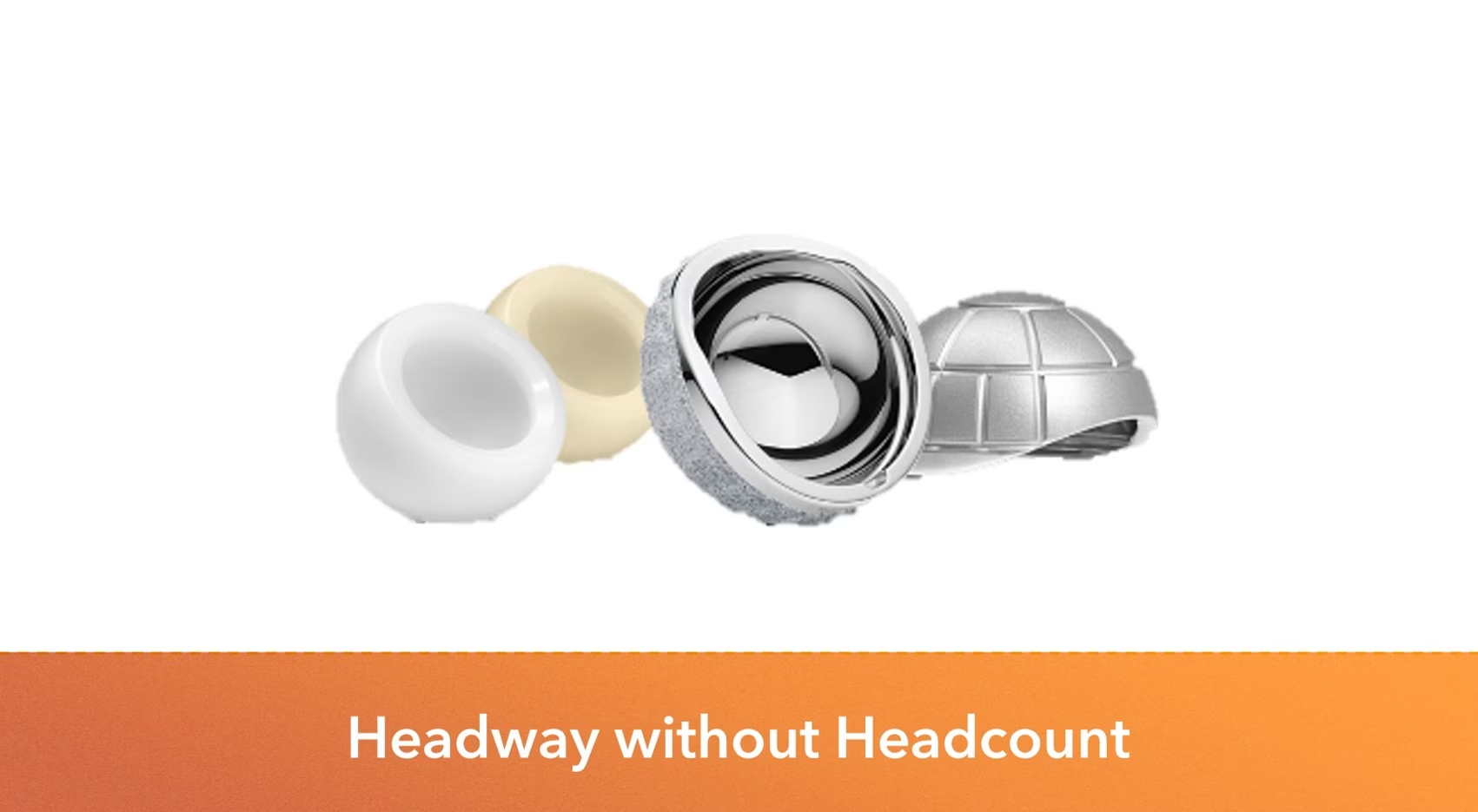
A leading European mid-sized orthopedic company wanted to accelerate the launch of a new double mobility acetabular cup. However, the company faced a capacity challenge. The required expertise was available within the organization, but limited resources threatened the project schedule. The company therefore needed external expertise to meet critical launch deadlines.
Capabilities
The company needed a partner with expertise in orthopedic implant development and validation. The partner also needed to manage complex project activities independently. In addition, strong regulatory and quality assurance skills were essential.
The partner had to prepare audit-ready documentation that met strict approval requirements. At the same time, the work needed to fit smoothly into the company’s existing processes and require minimal support from internal teams.
Solution
Acting as an extension of the internal team, BAAT assumed responsibility for critical development and validation activities related to the new implant. All work was performed directly within the client’s QMS and E-DMS, resulting in fully integrated design, verification, validation, and documentation outputs that met the company’s quality and regulatory requirements. This approach enabled the customer to rapidly incorporate project results without additional rework, review cycles, or resource-intensive transfer activities.
BAAT also ensured close alignment with the client’s engineering and quality teams throughout the project. Regular communication and structured reporting allowed fast decision-making and reduced delays. This collaborative approach helped maintain project momentum even under tight timelines and limited internal availability.
Result
BAAT delivered fully integrated, audit-ready development outputs that were accepted and approved directly by the company’s quality department. As a result, the new acetabular implant remained on track for its planned market introduction, despite internal resource constraints. By combining high-quality execution with seamless integration into the client’s processes and systems, BAAT enabled the company to achieve its development objectives while avoiding the administrative burden and inefficiencies often associated with outsourced activities. The collaboration also strengthened internal confidence in outsourcing complex development tasks, enabling faster decision-making in future projects.