
Navigating Post-Market Surveillance for Medical Devices in the EU
The European Union’s medical device regulations have changed significantly with the introduction of the Medical Device Regulation (MDR) and In Vitro Diagnostic Regulation (IVDR). These updates aim to strengthen patient safety and product reliability. A key requirement under MDR is Post-Market Surveillance (PMS), which ensures that medical devices remain safe and effective after entering the market.
What is Post-Market Surveillance?
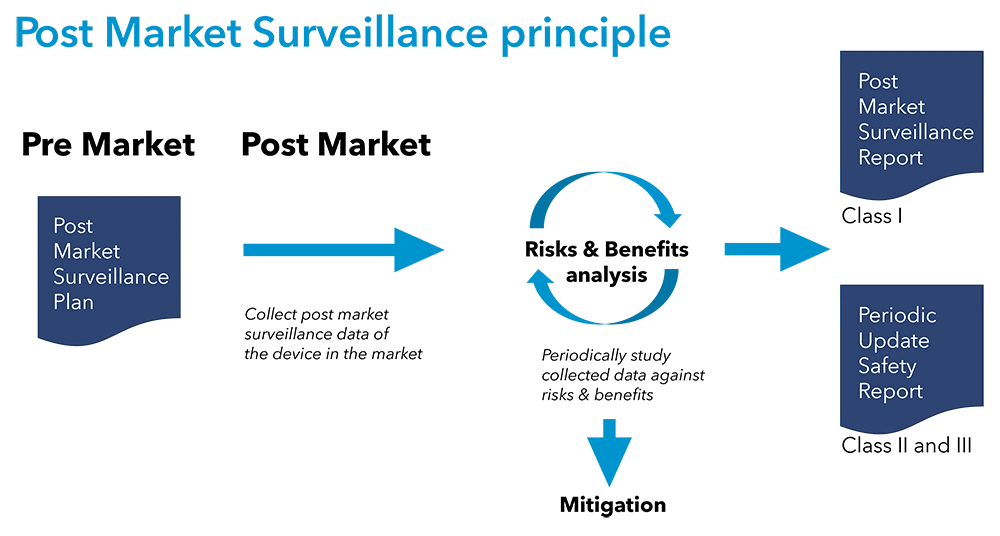
Post-market surveillance is a proactive process that monitors device performance and safety throughout its lifecycle. Manufacturers collect and analyze data to confirm that the device continues to meet compliance standards. This approach helps identify risks early and maintain an acceptable benefit-risk ratio.
Why is Post-Market Surveillance Important?
- Patient Safety: Continuous monitoring detects potential hazards and prevents harm.
- Regulatory Compliance: MDR mandates PMS for all medical devices.
- Product Improvement: Data insights lead to better designs and innovations.
- Market Trust: Demonstrating compliance builds confidence among healthcare providers and patients.
Key Components of Post-Market Surveillance
- PMS Plan: Every manufacturer must develop a PMS plan outlining the systematic process for gathering and evaluating information on device performance and safety. The plan should detail the methods for data collection, analysis, and reporting.
- Periodic Safety Update Report (PSUR) or PMS Report (PMSR): Manufacturers of class IIa, IIb, and III devices must prepare a PSUR, and manufacturers of Class I devices must prepare a PMSR, summarizing the results and conclusions of the PMS data. These reports are updated at regular intervals and reviewed by notified bodies.
- Post-Market Clinical Follow-up (PMCF): PMCF is an essential part of PMS, focusing on gathering clinical data to confirm the safety and performance of the device. It involves conducting clinical investigations or observational studies in the post-market phase.
- Vigilance System: This involves reporting and evaluating incidents and Field Safety Corrective Actions (FSCAs). Manufacturers must have a system in place to report serious incidents to the relevant Competent Authorities within specified timeframes.
Implementing an Effective PMS System
- Data Collection: Utilize various sources such as user feedback, complaints, manufacturing quality information, literature reviews, and registries to gather comprehensive data on device performance.
- Clinical Evaluation and Risk Management: Integrate PMS findings into the clinical evaluation and risk management processes, updating benefit-risk assessments and mitigation measures as necessary. Partnering with an ISO 13485-certified organization like BAAT ensures these processes are both compliant and efficient.
- Training and Resources: Ensure that staff involved in PMS activities are adequately trained and that sufficient resources are allocated to maintain an effective PMS system.
- Stakeholder Communication: Maintain open lines of communication with all stakeholders including e.g. distributors, healthcare providers, patients, and regulatory bodies. Timely dissemination of relevant information is crucial for effective surveillance.
Challenges and Best Practices
Challenges
- Data Volume and Quality: Handling large volumes of data from various sources and ensuring its accuracy can be daunting.
- Regulatory Changes: Keeping up with evolving regulations and standards requires continuous effort and vigilance.
- Resource Allocation: Implementing and maintaining a robust PMS system demands significant resources, both in terms of personnel and finances.
Best Practices
Proactive Approach: Adopt a proactive rather than reactive approach to PMS, focusing on early detection and prevention of issues.
Continuous Improvement: Regularly review and update PMS processes to align with the latest regulatory requirements and industry best practices.
Collaboration: Engage with stakeholders, including healthcare professionals and patients, to gather valuable insights and feedback.
Experience matters
Partnering with an ISO 13485-certified organization like BAAT ensures compliance and efficiency. BAAT helps you design and maintain a robust PMS system, simplifying documentation and stakeholder coordination.
BAAT Medical can help you to understand, navigate, develop and maintain a comprehensive and complying PMS system. This will smoothen the various roles and stakeholders and their needs and assists in generating the required documentation for you.