Tips for Medical Device Startups
Medical Device Startups come to BAAT Medical
Author: Ortho Spine News and Elizabeth Hofheinz, M.P.H., M.Ed.
In today’s competitive MedTech landscape, wasted effort can be costly. Many medical device startups start with a strong idea, yet they often struggle along the development path. As a result, they may run into serious obstacles especially when the path leads straight to the FDA. However, one company in the Netherlands has developed a strong reputation for guiding startups through this complex journey. BAAT Medical Products has become a trusted partner for bringing medical innovations to market, from the first sketch to final approval.
A changing industry
Gert Nijenbanning, M.Sc., Ph.D., and Managing Director of BAAT Medical, explains how the industry has shifted. “Years ago, a doctor and an engineer would simply bring an idea to a major company,” he says. “But times have changed. Large companies have moved away from doing their own product development.” As a result, opportunities for startups have grown, because big companies are now more willing to adopt solutions created elsewhere.
The hidden problems startups face
Yet more opportunity does not mean an easier process. According to Nijenbanning, many startups focus so intensely on their product that they overlook essential business requirements. “Startups rarely understand what multinational companies expect,” he explains. These expectations include compliance, validation, manufacturing scalability, documentation, and risk management.
This narrow focus becomes a challenge when seeking CE certification or entering the FDA approval process. Both regulatory paths require strict documentation, structured testing, and the ability to prove that the device is safe and effective. Without the right preparation, startups often find themselves unprepared for these demands. This can slow down progress or even halt development entirely.
How BAAT Medical fills the gap
BAAT Medical specializes in taking an idea from early concept to a fully approved product. Their engineers and specialists support every step of the journey. This approach helps startups stay focused while meeting the technical and regulatory requirements needed for market success.
Moreover, large medical device companies increasingly outsource development tasks. They want reliable partners who can deliver complete solutions. BAAT acts as that partner by managing product development and preparing the device for integration into existing distribution channels.
Global challenges for startups
The challenges faced by medical device startups are not limited to one country. For instance, research in the Netherlands shows that only 29% of Dutch startups grow into scale-ups. According to Techleap’s Dutch Healthtech 2021 Report, one major reason is that founders often focus heavily on technology. However, many do not spend enough time building the business side or expanding internationally.
This issue mirrors what BAAT Medical sees every day. Startups need more than a strong product. They require a clear strategy, understanding of regulations, and scalable operations. Without these elements, growth becomes difficult.
Supporting innovation from start to finish
By offering complete guidance from the first idea to regulatory approval BAAT Medical helps startups avoid common pitfalls. With the right support, companies can bring their innovations to global markets and improve patient care worldwide.
How BAAT Medical Uses Its Expertise for Startups
BAAT Medical begins every project with the customer’s idea. “We follow their lead and help make their vision a reality,” says Nijenbanning. The process starts with a validation plan, which outlines real development costs, risks, and required steps. “It is always more expensive than people expect,” he adds.
Step 1: Identifying Costs and Risks
BAAT asks key questions:
-
What risks does this product carry?
-
How can we reduce those risks early?
-
What validation steps are needed?
This creates a realistic foundation for development.
Step 2: Medical Device Design Phase
Next comes a specialized design phase. BAAT hosts an “objection roundtable,” where the team puts every concern on the table.
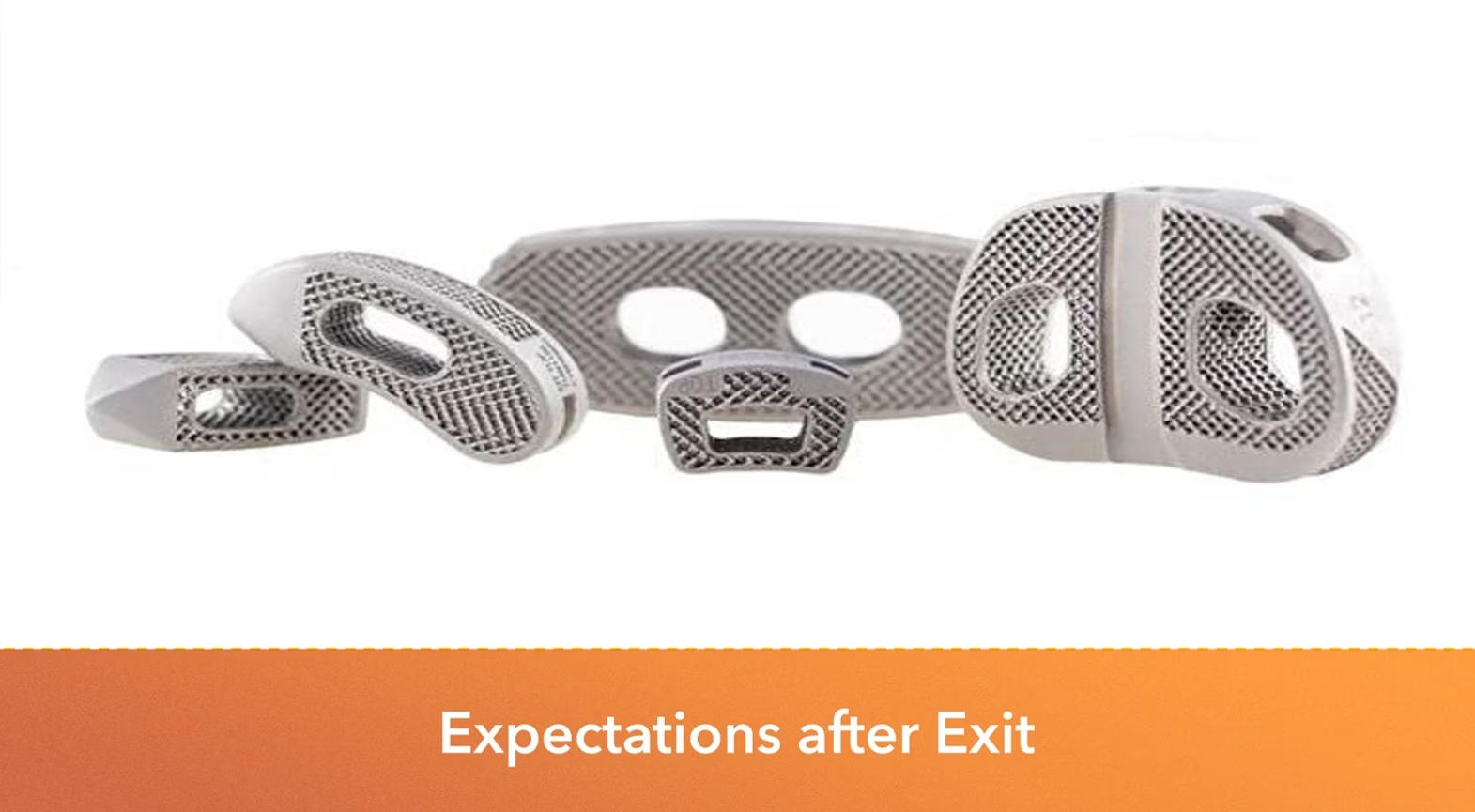
For example, some assumed that a particular 3D-printed cage “couldn’t be cleaned.” BAAT performed the proper tests and proved otherwise.
After resolving objections, the team maps out:
-
the manufacturing chain
-
the clinical pathway
-
validation tests required
-
documentation needed for approval
Step 3: Must-Haves vs. Nice-to-Haves
Nearly 80% of funding goes toward engineering validation. This stage must run smoothly. Because BAAT prepares all instruments, implants, and documentation ahead of time, the validation phase works like a “well-oiled machine.”
Their FDA experience also becomes a major advantage. “We know how much information to give never too much or too little,” says Nijenbanning. BAAT also understands what must be done immediately and what can wait, saving startups time and money.