Small print matters – Lessons Learned from MedTech company BAAT Medical Products
Lessons learned from MedTech company Baat Medical: Small print matters
Why we write on this topic
As MedTech Twente Week 2022 approached, many companies prepared to share their latest innovations. One of them was BAAT Medical, a fast-growing MedTech company based in Hengelo. The company began as a University of Twente spin-off and has grown into a respected scale-up that supports global start-ups, scale-ups, and large multinationals. They guide medical ideas from concept to fully certified products.
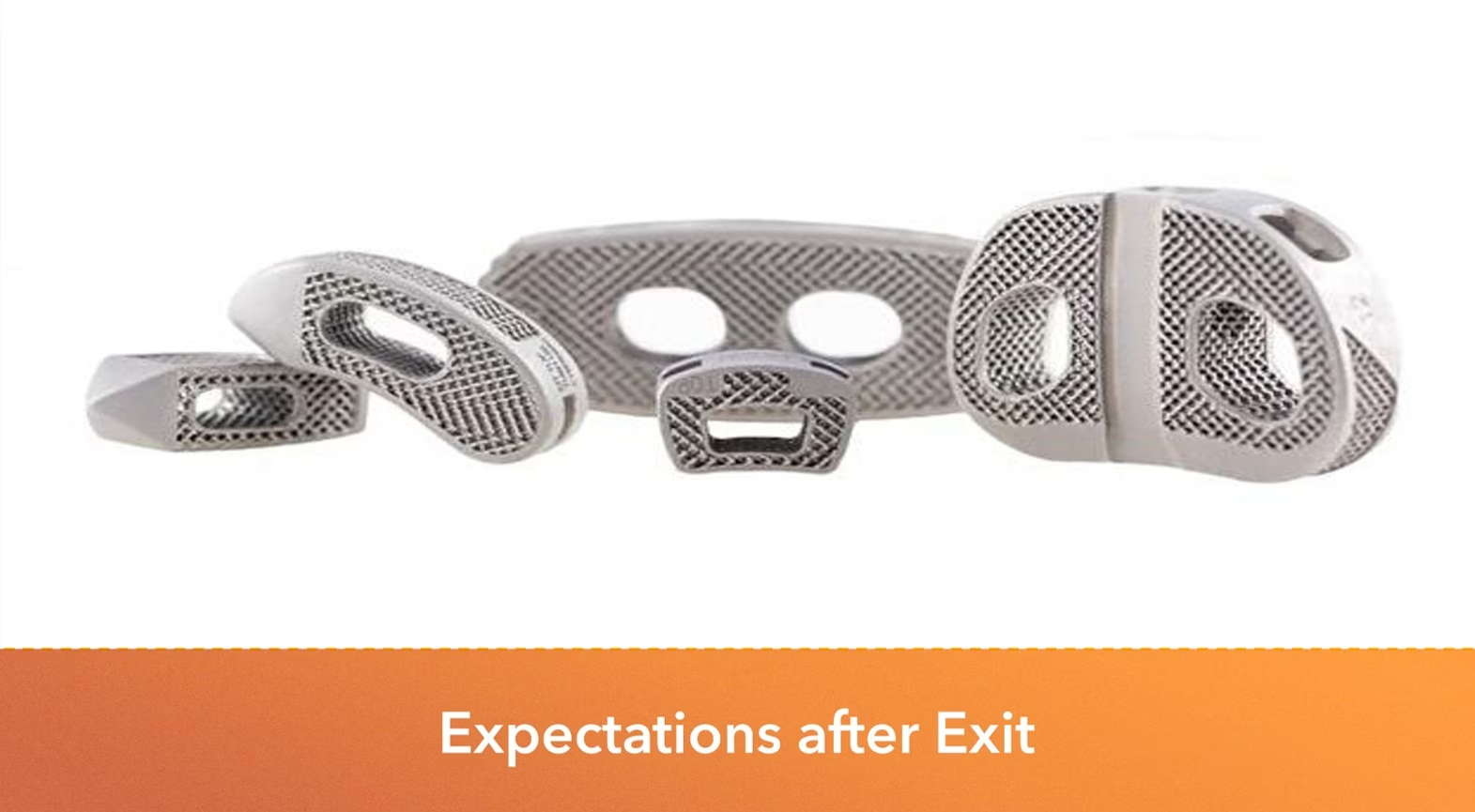
Over the years, BAAT Medical has helped create many devices, including 3D-printed spinal implants, electronic tools, and medical instruments. According to Gary Antonius, Business Development Global, one lesson stands out: every detail must be correct, even down to the sixteenth decimal point.
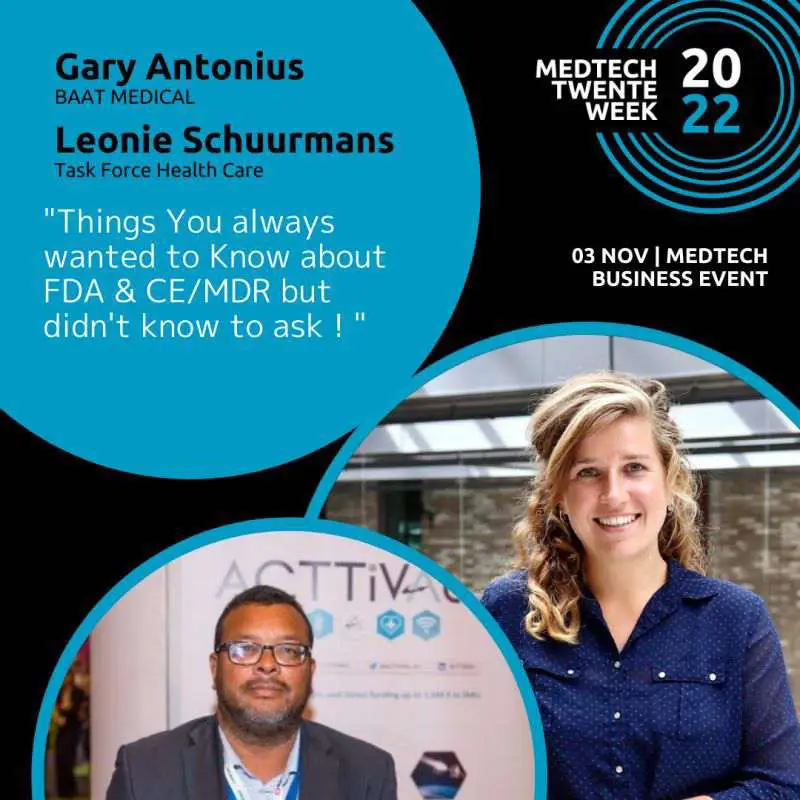
How is BAAT Medical doing today?
The company is currently in a strong growth phase. New projects continue to arrive, both from long-term clients and new partners. As medical technology becomes more complex, the global demand for accurate and safe product development keeps rising.
The most important lesson learned
Gary shares a clear example. A multinational company recently asked BAAT to produce a titanium 3D-printed intervertebral cage. This type of device requires a flawless quality management system. When developing a medical product, everything must be documented and tested according to strict standards. You must prove that it works as intended, while also ensuring patient safety.
Mistakes can lead to serious problems, such as liability claims or the need to restart the entire project. Therefore, every drawing, calculation, and validation step must be exact.
Medical products must also meet regulatory requirements. In the United States, companies follow FDA guidelines. In Europe, devices must comply with CE-MDR rules. Although both systems aim for safety, the details differ. If a company wants to launch a product in both markets, it must carefully track these differences and adjust accordingly.
How does BAAT ensure accuracy?
The company relies on a strong multidisciplinary team. Engineers, doctors, legal experts, and industrial designers all review each product from different viewpoints. This approach helps them catch issues early and confirm that the device is safe and effective.
The value of the Twente ecosystem
BAAT maintains close ties with the University of Twente. As a result, they attract skilled young professionals who can work on global projects from start to finish. The local culture also shaped the company’s approach. People in Twente value honesty, and BAAT applies this mindset too. If they do not believe in a product idea, they simply do not move forward with it.
Proud achievements and future goals
BAAT is proud of the many products they helped bring to market, especially those that truly improve patient lives. They have also seen several clients grow from start-ups to successful companies acquired by major industry players.
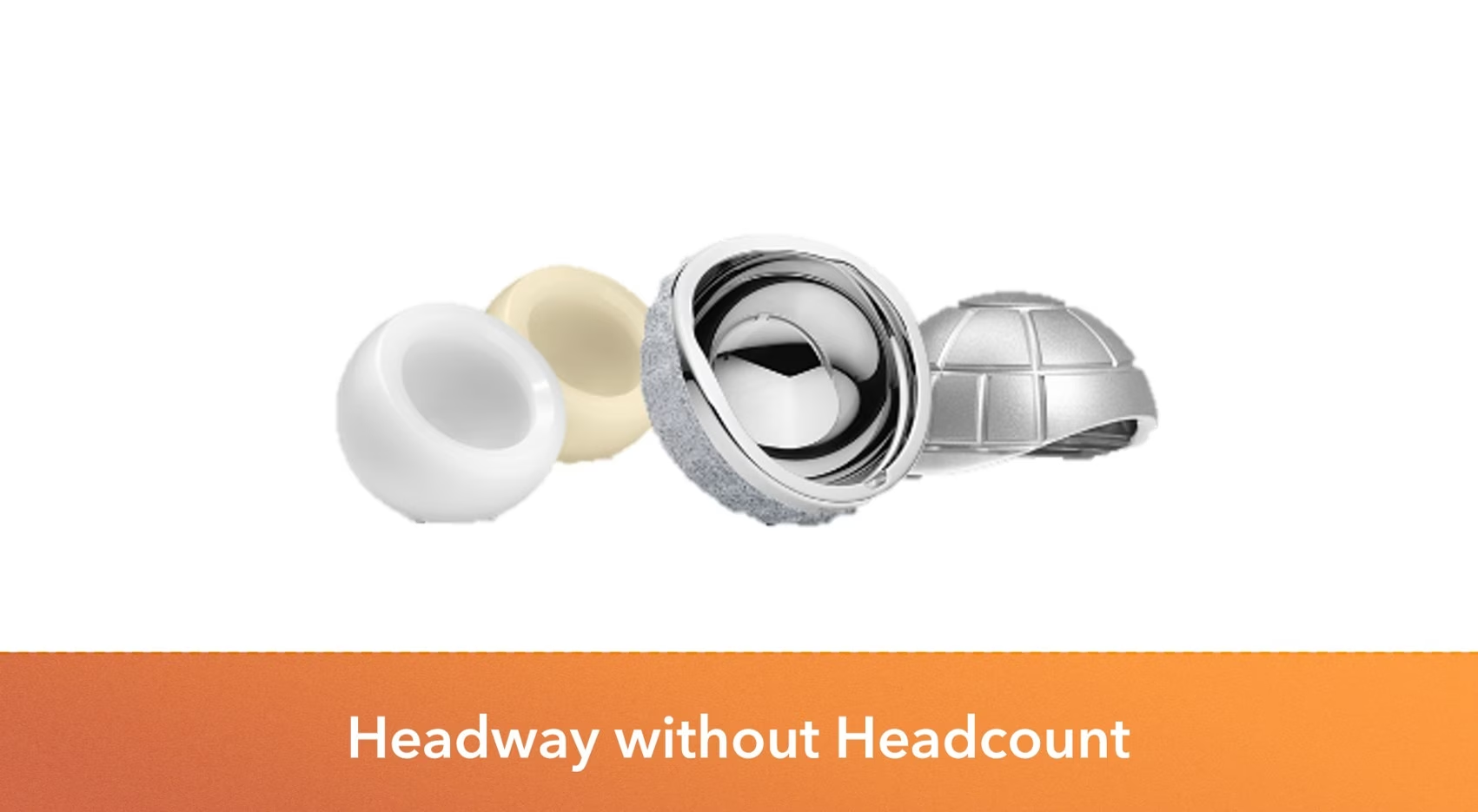
Looking ahead, BAAT hopes to expand further into the United States, Europe, the Middle East, and Asia. They aim to help develop advanced devices, such as artificial hips that last 50 years instead of 25.
Why details always matter
Each country has its own extra requirements, from additional tests to specific documentation. Although this adds complexity, it ensures high-quality care and better outcomes for patients. For BAAT, the fine print is not a burden—it is the foundation of reliable medical technology.
BAAT Medical collaborates with partners, customers and companies in many ways, on a broad level in the MedTech playing field. Be sure to read the Spinal Implant Updates we did with Surgalign.
Get in touch with BAAT Medical to discuss FDA and MDR and CE topics you might face in the medical device playing field. Gary Antonius or Dymphy van der Wilk are happy to schedule a meeting.
Links: Visit medtechtwente.nl and innovationorigins.com
Leave Gary or Dymphy a message
Read More News